Latest Artificial Intelligence Updates Changing Daily Life
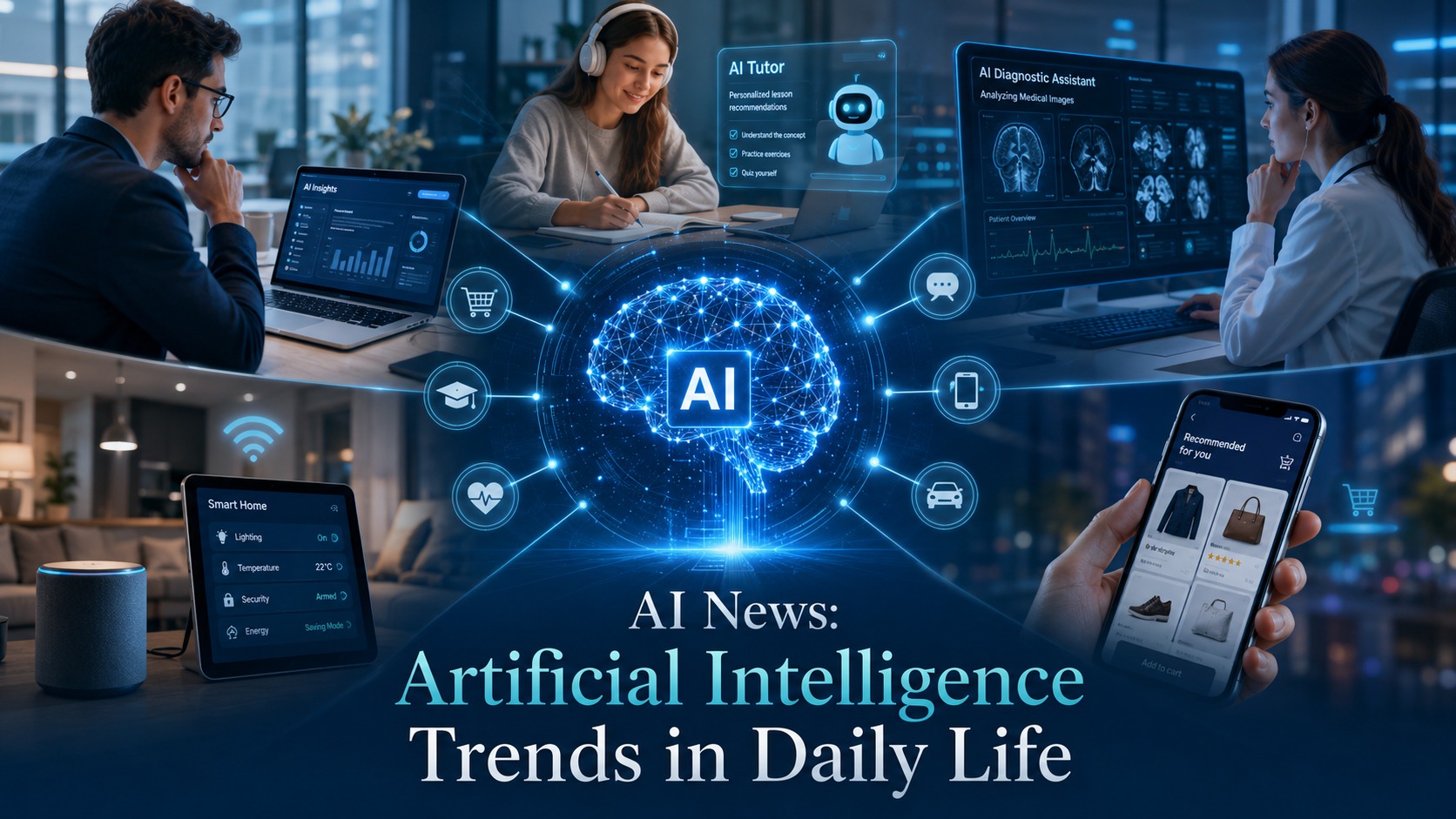
Artificial intelligence is no longer something people only hear about in science fiction or technology labs. It is now part of daily routines, from search engines and phone assistants to shopping recommendations, business tools, education platforms, healthcare systems, and creative apps. Today, AI News shows that artificial intelligence is becoming more practical, more visible, and more connected to the way people live and work. Reports from Stanford’s AI Index show that AI’s influence across society, the economy, and governance is continuing to intensify, while recent business surveys show wider use of AI across organizations.
Why Artificial Intelligence Is Now Everyday Technology
AI has moved from a background technology into tools people use every day. When someone receives a smart email suggestion, unlocks a phone with facial recognition, searches online, gets a playlist recommendation, or uses a chatbot for customer support, AI is often working behind the scenes. These tools are designed to make tasks faster, more personal, and easier to complete.
The biggest change is that AI is no longer limited to big companies or expert users. Many apps now include AI features that help regular people write, summarize, plan, translate, edit images, organize schedules, and understand information faster. This makes artificial intelligence feel less like a future concept and more like a normal part of modern digital life.
AI in Workplaces and Business Decisions
Businesses are using AI to improve speed, productivity, and decision-making. Customer service teams use chatbots to answer basic questions. Marketing teams use AI to study customer behavior and create content ideas. Finance teams use AI tools to detect patterns, manage reports, and support forecasting. In many offices, AI is becoming a daily assistant rather than a separate technology project.
McKinsey’s 2025 global survey describes a business environment where AI use is widening, including the rise of agentic AI, but many organizations still face challenges when moving from experiments to real scaled impact. This means companies are interested in AI, but success depends on strategy, training, data quality, and responsible use.
How AI Is Changing Learning and Education
Students and teachers are also seeing major changes. AI tools can explain difficult topics, create practice questions, help with language learning, summarize long reading materials, and support research planning. For teachers, AI can help draft lesson ideas, organize learning resources, and provide feedback support.
Still, education needs balance. AI can support learning, but it should not replace critical thinking, original writing, teacher guidance, or real understanding. The best use of AI in education is as a helper that makes learning easier, not as a shortcut that removes effort.
AI Tools in Healthcare and Daily Wellness
Healthcare is another area where AI is becoming more useful. AI can help organize medical data, support image analysis, improve patient communication, and assist healthcare professionals with administrative work. It can also help people track wellness habits through apps that monitor sleep, exercise, nutrition, and reminders.
However, AI health tools should be used carefully. They can provide helpful information, but they are not a replacement for qualified medical advice. The real value comes when AI supports professionals and patients while keeping safety, privacy, and accuracy at the center.
Smart Homes, Shopping, and Personal Convenience
AI is also changing how people shop and manage their homes. Online stores use AI to suggest products based on browsing habits. Streaming apps recommend shows and music based on past choices. Smart home devices can control lights, adjust thermostats, remind users about tasks, and help manage daily routines.
These changes make daily life more convenient, but they also raise questions about privacy and data use. People should understand what information apps collect and how it may be used. Convenience works best when users also have control, transparency, and trust.

The Rise of Creative AI Tools
Creative work has been strongly affected by AI. Writers use AI for outlines and editing support. Designers use AI to explore visual ideas. Musicians, video creators, and marketers use AI tools to speed up production and test different creative directions. These tools can help people produce more ideas in less time.
At the same time, creativity still needs human judgment. AI can generate options, but people decide what feels original, useful, ethical, and emotionally strong. The future of creative work will likely depend on a mix of human taste and machine support.
Jobs, Skills, and the Future of Work
One of the biggest questions around AI is how it will affect jobs. Some tasks may become automated, especially repetitive work. At the same time, new roles are appearing in AI operations, data management, AI safety, prompt design, automation strategy, and digital transformation.
The World Economic Forum’s Future of Jobs Report 2025 highlights that technology trends, including AI, are expected to reshape roles and skills across the labor market by 2030. This does not mean every job disappears. It means many workers will need to learn new tools, adapt existing skills, and become comfortable working with AI systems.
What These Changes Mean for Regular People
For regular users, the most important point is simple: AI is becoming part of many everyday choices. It may help plan a trip, compare products, summarize documents, create images, answer questions, or manage work tasks. People who learn how to use AI carefully may save time and make better decisions.
This is why Artificial Intelligence Trends matter beyond the technology industry. They affect how people communicate, shop, learn, work, create, and solve problems. Understanding these trends helps users stay informed instead of feeling surprised by fast changes.
Responsible AI Is Becoming More Important
As AI becomes more common, responsible use becomes more important. People need tools that are accurate, fair, secure, and transparent. Companies need policies for privacy, data protection, human review, and ethical decision-making. Users also need to check AI-generated information instead of trusting every answer automatically.
Stanford’s AI Index notes expanded attention to responsible AI practices and AI’s growing role in science and medicine, showing that the conversation is not only about innovation but also about accountability. The more powerful AI becomes, the more important it is to use it wisely.
Conclusion
AI News is becoming more important because artificial intelligence is changing daily life in practical ways. From workplaces and classrooms to healthcare, shopping, smart homes, and creative tools, AI is becoming a helpful part of modern routines. The key is not just using AI, but understanding it. People who stay informed about artificial intelligence can make smarter choices, protect their privacy, improve their skills, and use new tools with more confidence.
Frequently Asked Questions
1. What is AI News about?
AI News covers updates, trends, tools, and real-world changes related to artificial intelligence in business, education, healthcare, technology, and daily life.
2. How is artificial intelligence changing daily life?
Artificial intelligence helps with search, recommendations, smart devices, writing tools, customer service, online shopping, education apps, and workplace productivity.
3. Are AI tools safe to use?
AI tools can be useful, but users should check important information, protect personal data, review privacy settings, and avoid relying on AI for expert decisions without human guidance.
4. Will AI replace jobs?
AI may automate some tasks, but it can also create new roles and support workers. Learning AI-related skills can help people adapt to future workplace changes.
5. Why should people follow artificial intelligence trends?
Following artificial intelligence trends helps people understand new tools, prepare for workplace changes, make smarter technology choices, and use AI more responsibly.
Stay Updated with the Future of AI
Explore the latest artificial intelligence updates, technology insights, and future-focused news shaping how people live and work.

